Cobblestone Park Is Already Pricing a Scout Motors Workforce That Hasn't Arrived
October 1, 2026
October 1, 2026
Cross Blythewood Road from the brick-pillared entrance to Cobblestone Park and you're standing at the edge of 1,100 acres where Scout Motors is building a $2 billion vehicle assembly plant. The neighborhood on one side has a 27-hole championship course, a clubhouse, and a pool that have been drawing buyers for years. The site on the other side has promised 4,000 jobs and 200,000 vehicles a year, and neither of those numbers has happened yet.
That gap matters more than it looks, and the timeline behind it is longer than most buyers realize. Homes in Cobblestone Park were already selling fast in the fall of 2025, more than a year before Scout's assembly floor employed more than a few hundred people. The company still isn't expecting to ship a vehicle to a paying customer until 2027. If you're comparing Cobblestone Park to other Blythewood-area neighborhoods today, the honest version of the story is that buyers started pricing in a workforce Scout hadn't hired yet, and in some respects still hasn't.
Real activity in Cobblestone Park was already strong by August 2025. At that point there were 23 active listings in the neighborhood, ranging from a $660,000 brick home backing up to the fifth hole of the Black Course to a $375,000 listing on Crimson Queen Drive. A local agent reported that summer that one Cobblestone listing went under contract within 48 hours of hitting the market, with three more homes in the neighborhood going under contract in a single week.
That agent's read on the timeline was direct, describing Cobblestone Park as
one of those neighborhoods that could offer a return on investment a few years from now
not immediately. That distinction is the whole point, and it was true even back then. Fast showings and fast contracts in 2025 described buyer appetite well ahead of the plant's actual payroll. They didn't describe what Scout Motors had delivered to the local economy at that point, and a year later the gap between the two still hasn't fully closed.
Scout Motors opened its first round of assembly line worker applications in February 2026, six months after Cobblestone Park listings were already selling in 48 hours. Here's what the company's own hiring timeline has looked like since:
The 4,000-job figure attached to every headline about the plant is a target for full build-out, not an employment count anyone has confirmed hitting yet. As of this year's public updates, the number of people actually on payroll was still measured in the hundreds. That's a meaningful gap if you're trying to figure out how much economic activity is genuinely flowing into Blythewood right now versus how much was priced into home values a year or more ahead of the fact.
Pull housing data from more than one source and the picture gets less tidy, not more. Here's what four trackers showed for Blythewood in the same general window this year:
| Source | Metric | Figure | Time Window |
|---|---|---|---|
| Zillow (ZHVI) | Average home value | $340,794, up 0.9% year over year | As of August 31, 2026 |
| Movoto | Median list price | $360,000, flat year over year | September 2026 |
| Local MLS feed (hubrec) | Median list price | $354,490 across 263 active listings | As of September 24, 2026 |
| Redfin | Average sale price | $489,000, up 11.4% year over year | Reported for the prior month |
Those numbers shouldn't be read as four opinions about the same market. They're measuring different slices of it. Zillow's average includes every home it can value, listed or not, which smooths out short-term swings. Movoto and the local MLS feed are pulling live listing data, which is more sensitive to what's actually for sale on a given day. Redfin's average sale price reflects whichever homes actually closed, and if a handful of higher-priced properties closed in that window, the average moves a lot without the broader market moving at all.
The practical read for a buyer is that Blythewood right now is not one market. It's a mix of established neighborhoods carrying steady value, newer construction pulling averages up, and a golf-course community where certain listings are getting bid up fast on plant-driven anticipation. Cobblestone Park sits in that last category, which is exactly why its individual activity looks hotter than the town-wide averages suggest.
The plant's construction has not been friction-free, and that matters for anyone doing due diligence on a property near the site. In August 2026, a couple who had lived adjacent to the construction site for 40 years filed suit against Scout Motors and Richland County, alleging that near-daily blasting damaged their home and that sediment-laden stormwater washed out their driveway, ultimately forcing them to leave the property. State regulators separately fined Richland County over sediment escaping the construction site into nearby waterways, with the county paying a final adjusted penalty after meeting compliance requirements.
There's also an open question about who bears the plant's remaining costs. State lawmakers have so far declined to cover a $150 million gap in site preparation funding the S.C. Department of Commerce incurred, pending a legislative audit. And a coalition of community and labor organizations asked Scout Motors in August 2026 to sign a formal Community Benefits Agreement covering accountability to the surrounding area. Scout declined, while saying it remains committed to engaging with the community through existing job and training programs.
None of this means the plant won't deliver what it's promised. It means the relationship between the factory and its immediate neighbors is still being negotiated in public, in court, and in the state budget, all at the same time the housing market next door is already pricing in a settled outcome.
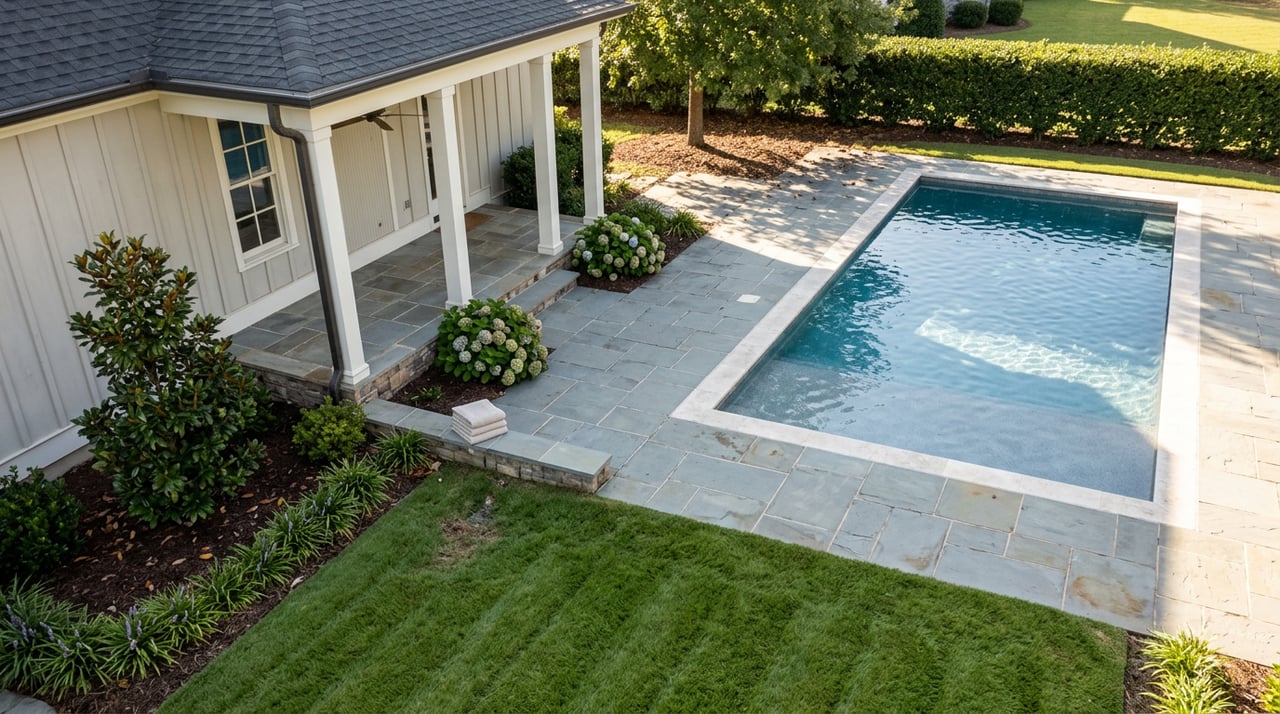
Strip out the Scout Motors story entirely and Cobblestone Park still has something that doesn't depend on a hiring timeline: a gated golf course community built around a 27-hole championship course, with a clubhouse, pool, and on-site dining that have been drawing buyers on their own terms for years. That amenity package is real and already paid for. It's not a bet on 2027.
The land activity happening further out from the neighborhood tells a related story about anticipation outrunning reality. A historic 200-year family farm near the plant went up for sale at $1.7 million in late 2025, and local news coverage at the time noted that interest in land acquisition around the Scout Motors site had clearly picked up. That's speculative land value building ahead of the jobs, in a different way than Cobblestone Park's finished-neighborhood value, but it's the same underlying pattern: money moving in on a promise before the promise has fully paid off.
Not on any timeline anyone can currently point to. The plant's own hiring numbers put meaningful local employment growth in 2027 and beyond, not now. Buying near the site today is a bet on that timeline holding, not a transaction backed by jobs that already exist.
If a property sits close enough to the Scout Motors site to have experienced construction activity, it's worth asking directly about blasting, drainage changes, or any documented impact, the same categories raised in the pending lawsuit against the plant. That's a reasonable question for any seller or listing agent to answer, separate from anything related to the home's condition otherwise.
If you're weighing Cobblestone Park against another Blythewood-area neighborhood and trying to figure out how much of the price is amenity value versus how much is a bet on Scout Motors' timeline, that's exactly the kind of comparison worth working through with someone who's tracking both sides of it. Mackenzie Robertson can walk you through what's currently selling, what's still speculative, and how to time an offer around it.
Stay up to date on the latest real estate trends.

Let’s make your next move in Columbia effortless and successful.